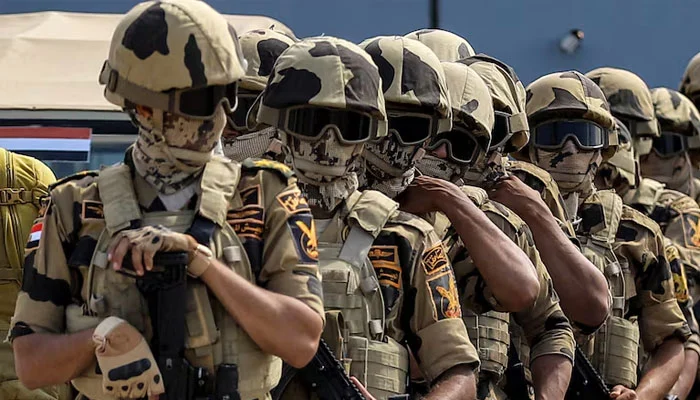
The title Military overhaul: ‘Jointness’ in name, centralisation in practice originates from discussions around Pakistan’s recent military restructuring, particularly the 2025 amendments to Article 243 of the Constitution and related laws. These changes elevate the Chief of Army Staff (COAS) to also serve as Chief of Defence Forces (CDF), consolidating significant authority over multi-domain integration, restructuring, and jointness across the army, navy, and air force.
This approach promises synergy in operations but has sparked debate: while labeled as promoting “jointness,” critics argue it centralizes power in the army-dominated office, potentially at the expense of true inter-service equality and civilian oversight.
Pakistan’s armed forces have long grappled with coordination challenges in a multi-domain environment, from counter-terrorism to conventional threats along borders with India and Afghanistan. The reform aims to address outdated 1970s-era structures by unifying strategic commands under a National Strategic Command and empowering the CDF-COAS as the principal military advisor.
Yet, a retired general’s observation captures the irony: “Jointness is not being created between the services, it’s being created above them.” This echoes broader concerns that the overhaul reinforces army hegemony rather than dispersing authority, as seen in models like the U.S. Goldwater-Nichols Act or India’s Chief of Defence Staff (CDS) system.
The Push for Jointness in Modern Militaries
Jointness refers to seamless integration of army, navy, and air force capabilities for unified operations. In today’s warfare—blending cyber, space, precision strikes, and hybrid threats—single-service silos lead to inefficiencies, duplicated efforts, and delayed responses.
Pakistan’s military has historically operated with the army as the dominant force, given its role in national security and politics. The Joint Chiefs of Staff Committee (JCSC), established in the 1970s, aimed at coordination but remained limited, with the COAS often overshadowing other chiefs.
The 2025 changes transfer key functions like coordination and military diplomacy from the CJCSC to the CDF-COAS. This creates a centralized hub for strategy, planning, procurement, and operations, while naval and air chiefs focus more on administration and training.
Proponents see this as essential for efficiency amid resource constraints and diverse threats. A unified command could enable faster decision-making in crises, better resource allocation, and coherent multi-domain responses.
Centralisation: The Double-Edged Sword
Centralisation consolidates authority for unity of command, a classic military principle. In theory, it eliminates turf battles and streamlines execution.
In Pakistan’s context, with the army’s historical dominance and the need for quick responses in volatile regions, this makes operational sense. The CDF-COAS gains control over budgeting, force development, and induction of new systems—potentially reducing wasteful overlaps.
However, critics highlight risks. Concentrating power in one office, especially army-led, could marginalize the navy and air force, whose assets are critical for maritime security in the Arabian Sea or air superiority. This imbalance might stifle innovation from other services and create resentment.
There’s also the civilian-military balance. While the reform strengthens uniformed supremacy, it raises questions about democratic oversight. A strong defence ministry led by civilians could counterbalance this, but Pakistan’s history shows military influence often extends beyond barracks.
Compare this to India’s CDS model: The CDS promotes jointness without subsuming service chiefs entirely, acting as primus inter pares (first among equals) and focusing on tri-service matters through the Department of Military Affairs.
Pakistan’s path leans more toward consolidation under the army chief, diverging from dispersed authority in mature militaries.
Pros and Cons of the Overhaul
Pros:
- Unified command and faster decisions — Ideal for hybrid warfare and rapid mobilization.
- Resource optimization — Reduces duplication in procurement, training, and logistics.
- Enhanced multi-domain integration — Better coordination across land, air, sea, cyber, and space.
- Strategic coherence — Single-point advice to the prime minister strengthens policy alignment.
Cons:
- Risk of inter-service imbalance — Navy and air force may lose autonomy, leading to doctrinal dilution.
- Potential for over-centralisation — One office holding too much power could create bottlenecks or biases.
- Civil-military tensions — Formalizes military dominance, possibly weakening civilian control.
- Implementation challenges — Cultural shifts within services take time; rushed changes could disrupt readiness.
Real-World Implications and Examples
Think back to past conflicts. In the 1971 war, Pakistan’s forces suffered from poor coordination between services, contributing to losses. A more joint approach might have altered outcomes.
More recently, operations against militants in border regions have shown the need for integrated air-ground efforts. Yet, without true jointness, air support sometimes arrives late or mismatched.
The reform could change that. Imagine a scenario where a border incursion demands swift response: A centralized CDF could orchestrate precision air strikes, ground maneuvers, and naval blockades seamlessly.
But consider the flip side. If the army prioritizes land-centric doctrines, naval assets for sea denial or air force for strategic depth might underperform.
A retired officer once shared with me over chai how inter-service rivalries delayed equipment sharing during exercises. Light-hearted as it sounds, such stories highlight why jointness matters—and why forcing it top-down risks resistance.
People Also Ask (PAA)
What is jointness in the military?
Jointness means integrated operations where army, navy, and air force work as one under unified command, doctrine, and planning to maximize combat effectiveness.
Why is Pakistan reforming its military command structure?
To modernize for 21st-century threats, improve efficiency amid resource limits, and achieve better synergy in multi-domain warfare.
What is the role of the Chief of Defence Forces in Pakistan?
The CDF (dual-hatted with COAS) oversees integration, restructuring, strategic planning, procurement, and serves as principal military advisor.
How does Pakistan’s reform compare to India’s CDS system?
Pakistan centralizes under the army chief for operational control, while India’s CDS emphasizes coordination as first among equals without full subsumption of services.
What are the risks of military centralisation?
It could reduce service diversity, create power imbalances, and challenge civilian supremacy if not balanced by strong oversight.
FAQ
Is this overhaul good for Pakistan’s defense?
It could enhance efficiency and joint operations if implemented with safeguards for inter-service equity and civilian input. Without them, it risks reinforcing imbalances.
Will the navy and air force lose independence?
Not entirely—they retain roles in training and administration—but strategic and operational decisions shift toward the CDF, potentially limiting their voice.
How does this affect civilian control?
It strengthens military unity but could tilt the balance further toward uniformed leaders unless the defence ministry asserts more authority.
What global models inspired this?
It draws from needs for unified command but contrasts with U.S. (dispersed jointness via Goldwater-Nichols) or India (CDS-led coordination).
When will the changes fully take effect?
Implementation is ongoing, with upgrades to Joint Staff Headquarters and new commands; full effects may take years amid cultural adjustments.
Pakistan’s military overhaul tackles real gaps in jointness amid evolving threats. Yet the title rings true: what promises collaboration may deliver consolidation. Success depends on execution—ensuring jointness flows horizontally between services, not just vertically from one dominant office. Only then can it build a truly integrated force ready for whatever comes next.