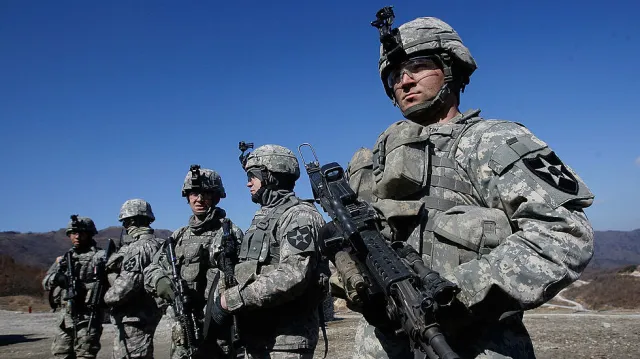
The headline “Trust in the military on the rise, but still below pre-pandemic levels” captures a nuanced shift in American public opinion. Recent surveys, particularly the Reagan National Defense Survey released in late 2024, show a modest rebound in confidence after several years of decline. This trend reflects broader societal dynamics, from the fallout of prolonged wars to evolving political landscapes.
Public trust in institutions has always fluctuated, but the U.S. military has historically stood out as one of the most respected. Post-9/11, confidence soared, often exceeding 80% in Gallup polls. The pandemic era and the chaotic Afghanistan withdrawal in 2021 marked a turning point, pushing “great deal” of trust levels down significantly. Now, signs point to recovery, though not a full return to earlier highs.
The Current Picture: A Slight Uptick
According to the 2024 Reagan National Defense Survey, 51% of Americans reported a great deal of trust in the armed forces. That’s up from 46% the previous year—the lowest since tracking began in 2018. Overall, 82% express at least “some” confidence, far outpacing other institutions like Congress (around 9-10% in similar polls) or the White House.
Gallup data from recent years shows confidence (“great deal” or “quite a lot”) hovering around 60-62% in 2024-2025, still below the 70%+ pre-2020 norms but stable or slightly improved from the 2023 low of 60%. Pew Research echoes this, with about 79% expressing confidence in the military to act in the public’s best interests in late 2024 surveys.
This rebound feels incremental, almost cautious. It’s not a dramatic surge, but it’s noticeable after consecutive drops tied to real-world events.
Historical Trends in Public Confidence
To understand the rise, look back. Confidence in the military has rarely dipped below majority levels since the all-volunteer force began in the 1970s.
- Post-Vietnam lows — In the late 1970s and early 1980s, trust hovered around 50-58% amid Cold War tensions and lingering war skepticism.
- Gulf War boost — Victory in 1991 pushed it to 85%.
- Post-9/11 peak — Confidence stayed above 70% for two decades, peaking near 85% in the early 2000s.
- Recent decline — Dipped to 69% in 2021 and lower afterward, hitting 60% in 2023 Gallup polls—the lowest in over two decades.
The “pre-pandemic” benchmark often refers to 2018-2019 figures around 70-73% in Gallup or 70% “great deal” in Reagan surveys. Today’s levels remain 15-20 points below that.
Here’s a quick comparison of key data points:
| Year/Source | % with “Great Deal” or High Confidence | Notes |
|---|---|---|
| 2018 (Reagan) | 70% | Pre-pandemic high |
| 2019 (Gallup) | ~73% | Stable post-wars |
| 2021 (Gallup) | 69% | Afghanistan exit impact |
| 2023 (Gallup) | 60% | Record low in decades |
| 2024 (Reagan) | 51% “great deal” (82% some+) | Rebound begins |
| 2024-2025 (Gallup/Pew) | ~60-62% / 79% confident | Modest recovery |
These numbers highlight resilience—the military still tops trust rankings—but also vulnerability to external shocks.
Factors Driving the Recent Rise
Several elements appear to contribute to the uptick.
First, distance from the Afghanistan withdrawal. The 2021 chaos—images of desperate evacuations and service member losses—hit hard. As time passes, memories fade, and focus shifts to emerging threats like China and Russia.
Second, global events reinforce the military’s role. Rising tensions in Europe and the Indo-Pacific remind people of deterrence needs. The Reagan survey shows strong support for overseas bases (62% see them as essential).
Third, political shifts play a part. Republicans’ confidence jumped notably in recent polls (from ~48% to 67% in some readings), possibly tied to leadership changes or perceived policy alignments. Democrats’ numbers dipped in contrast, showing polarization, but overall averages rise slightly.
Recruitment improvements also help. After pandemic-era shortfalls, enlistments rebounded, with some branches meeting or nearing goals by 2025. Positive stories of service can rebuild perception.
I remember talking to a friend who served in the Marines during the post-9/11 surge. He said the military felt “untouchable” back then—everyone thanked you at airports. After Afghanistan, he noticed a shift: fewer spontaneous thanks, more questions about “what went wrong.” Lately, he’s seen a subtle return to respect, especially as news highlights readiness against new adversaries. It’s not the hero worship of old, but it’s warmer than the low point.
Why Trust Remains Below Pre-Pandemic Levels
The recovery isn’t complete for good reasons.
The Afghanistan exit lingers as a symbol of perceived failure. Two decades of investment yielded rapid Taliban takeover, eroding faith in leadership and outcomes.
Politicization concerns persist. Debates over domestic deployments (like National Guard during protests) or cultural issues make some view the institution as less neutral.
Generational gaps widen the issue. Younger Americans (under 30) show lower trust—often around 36% high confidence—versus 60% for those 65+. Fewer family ties to veterans mean less personal connection.
Recruitment struggles tie back here. Only about 23% of youth qualify, and low propensity to serve reflects broader skepticism.
Partisan and Demographic Divides
Trust isn’t uniform.
- Republicans often lead with higher confidence (60-70% range recently).
- Democrats trail, sometimes dipping below 40% in polarized years.
- Independents fall in between but trend lower lately.
- Age matters: Older generations remember triumphs like Desert Storm; younger ones see endless wars and scandals.
This divide risks long-term erosion if not addressed.
Pros of High Military Trust
- Boosts recruitment and morale
- Supports defense funding
- Strengthens national cohesion
Cons of Lingering Low Trust
- Harder to attract talent
- Potential politicization backlash
- Weaker public support in crises
People Also Ask (PAA) Section
These reflect common Google queries on the topic:
Why has trust in the US military declined in recent years?
The drop ties mainly to the Afghanistan withdrawal’s chaos, prolonged war fatigue from Iraq/Afghanistan, and perceptions of politicization. Scandals and recruitment woes added pressure, though trust remains higher than for most institutions.
Which political party has higher trust in the military?
Republicans typically report higher confidence (often 60-70%+), while Democrats lag (sometimes 30-50%). Independents sit in the middle, but gaps widen during polarized times.
How does US military trust compare to other institutions?
The military consistently ranks highest—often 60%+ confidence—versus Congress (~10%), media (~20-30%), or big business (~15-20%). Small businesses and science sometimes edge it out in recent Gallup data.
Is military recruitment improving with rising trust?
Yes, modestly. Enlistments rose post-pandemic lows, with some branches hitting targets by 2025. Higher trust correlates with willingness to recommend service (up to 59% overall).
What could rebuild trust further?
Success in readiness, transparent leadership, avoiding domestic politicization, and highlighting global deterrence roles. Time away from major failures helps too.
FAQ: Quick Answers to Key Questions
What is the current level of trust in the US military?
Around 51% express a “great deal” of trust (Reagan 2024), with 60-79% showing high or some confidence across polls. It’s rising but below 70% pre-2020 highs.
Has trust in the military recovered fully from pandemic lows?
No—still 15-20 points below pre-pandemic peaks, though the downward trend reversed in 2024.
Where can I find the latest polls on military trust?
Check sources like the Reagan National Defense Survey (reaganfoundation.org), Gallup (news.gallup.com), or Pew Research (pewresearch.org). They release annual updates.
Does higher trust lead to better national security?
Indirectly, yes—stronger public support aids recruitment, funding, and resilience during threats.
Are there ways civilians can support rebuilding trust?
Engage positively with veterans, stay informed on defense issues, and encourage thoughtful discussions. Simple respect goes far.
The modest rise in trust signals hope. The military remains a bedrock institution, even if scarred by recent years. Rebuilding to pre-pandemic levels will take consistent performance, less division, and perhaps new generations seeing value in service. For now, the trajectory points upward—slowly, but upward.